Investigating Roof and Parapet Failure Under Heavy Snow Loads - Sunbury, Ohio
At Structured Design and Consulting (SDC), we regularly evaluate existing structures that have been modified over time. These retrofits often introduce risk when the load path is not fully considered.
In early 2026, Dax Clapsaddle, P.E., was called to assess a structural distress event at a building in Sunbury, Ohio. This case highlights the importance of maintaining a continuous lateral load path, particularly in older masonry buildings.
The Incident
When Snow Loads Compromise Structural Integrity During a severe winter event, snow accumulation imposed significant gravity loads on the roof. The building, originally designed with a flat roof, had been retrofitted with a pitched roof to address drainage issues.
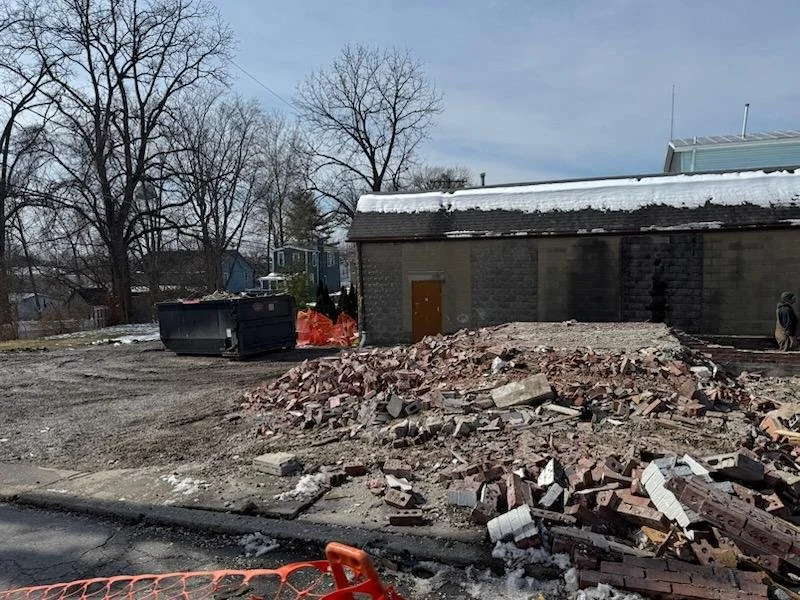
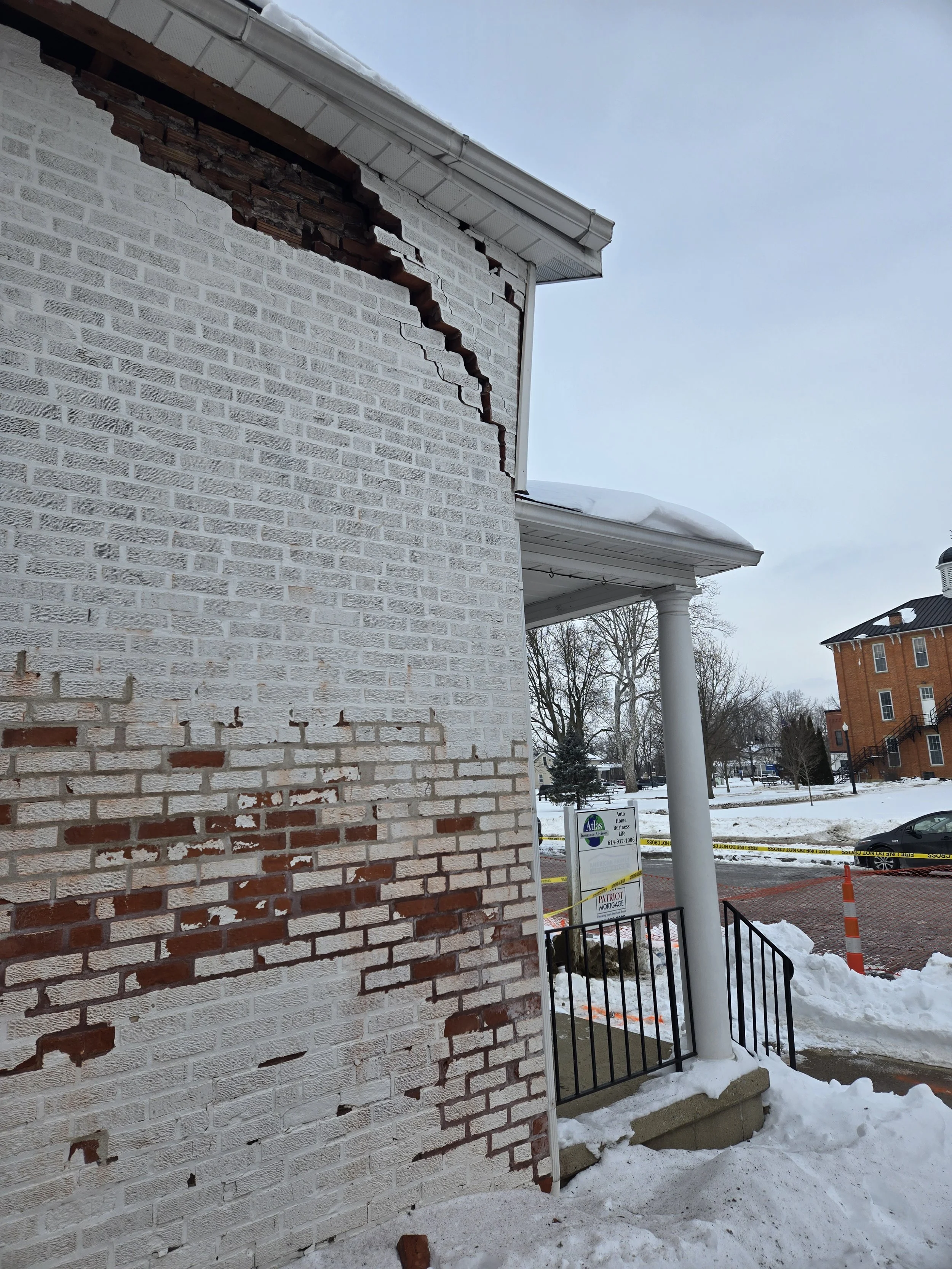
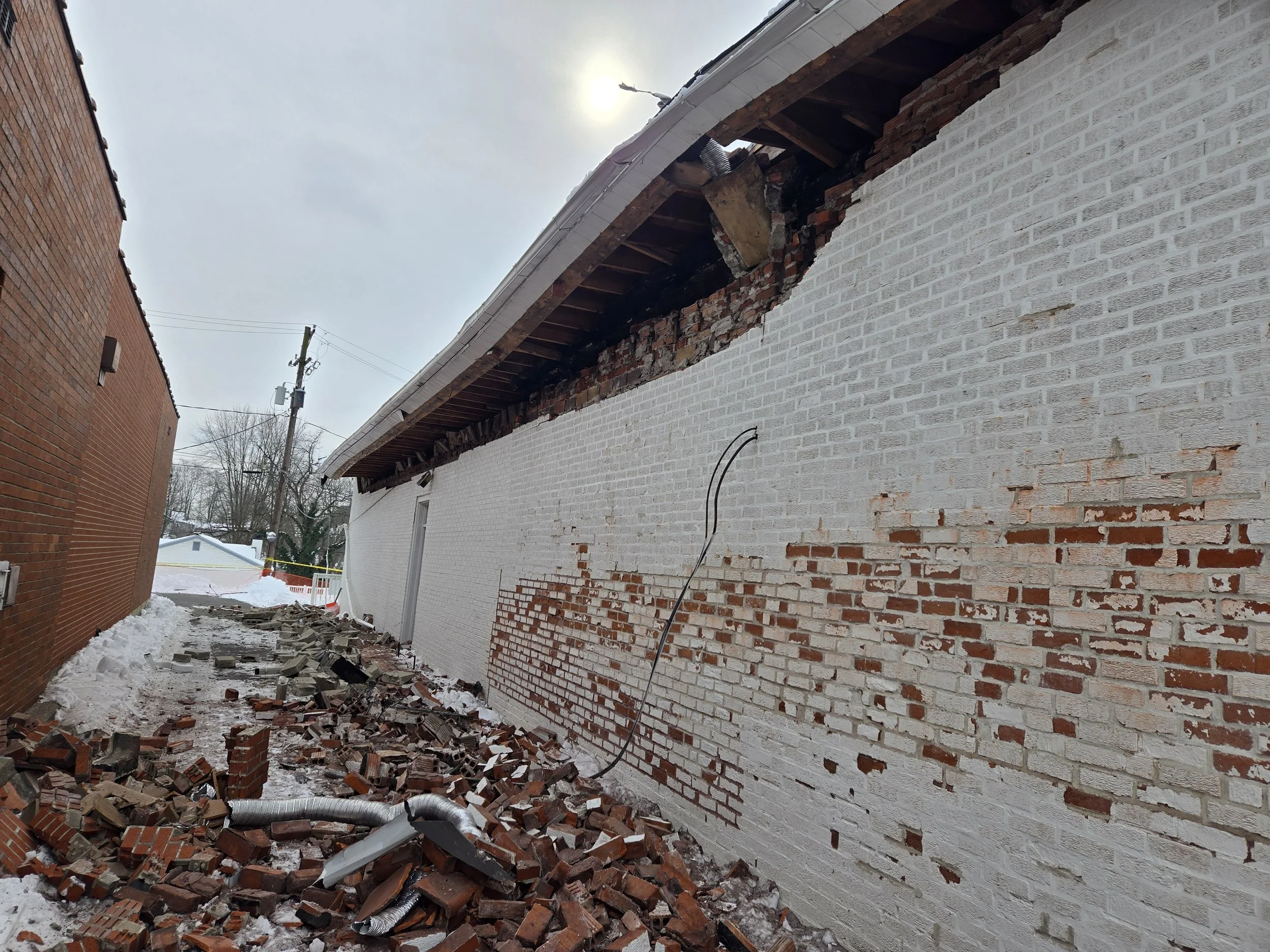
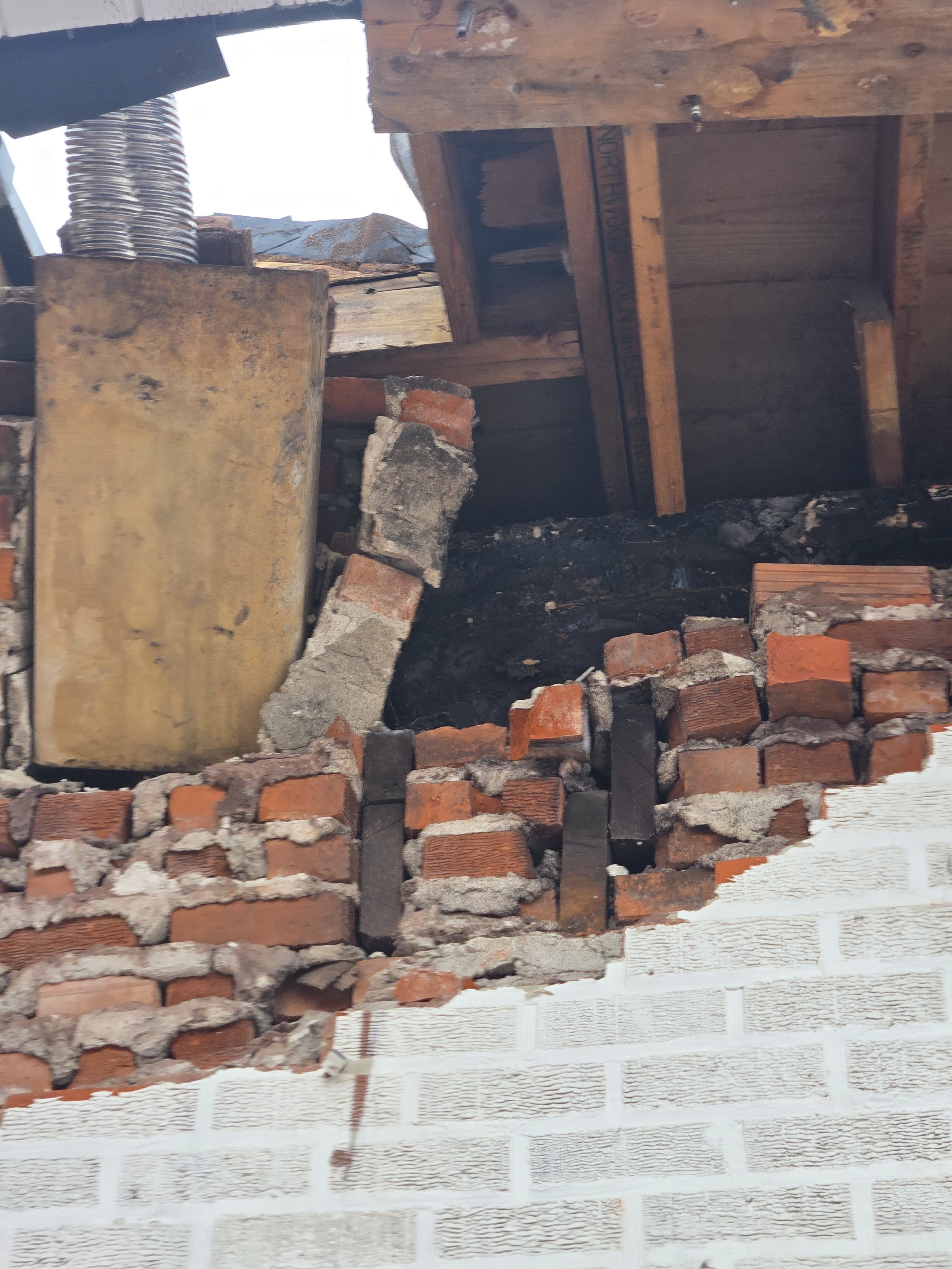
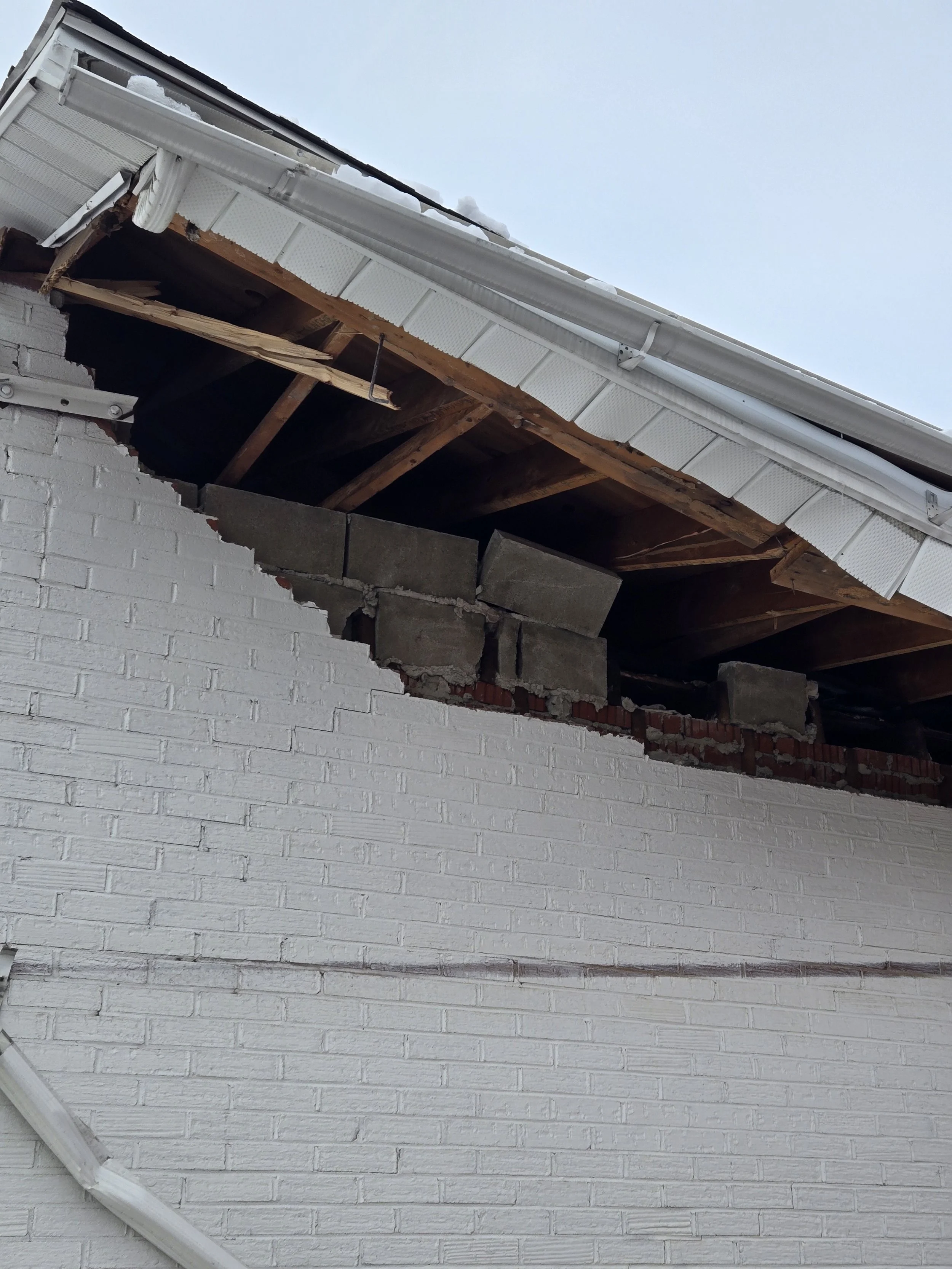
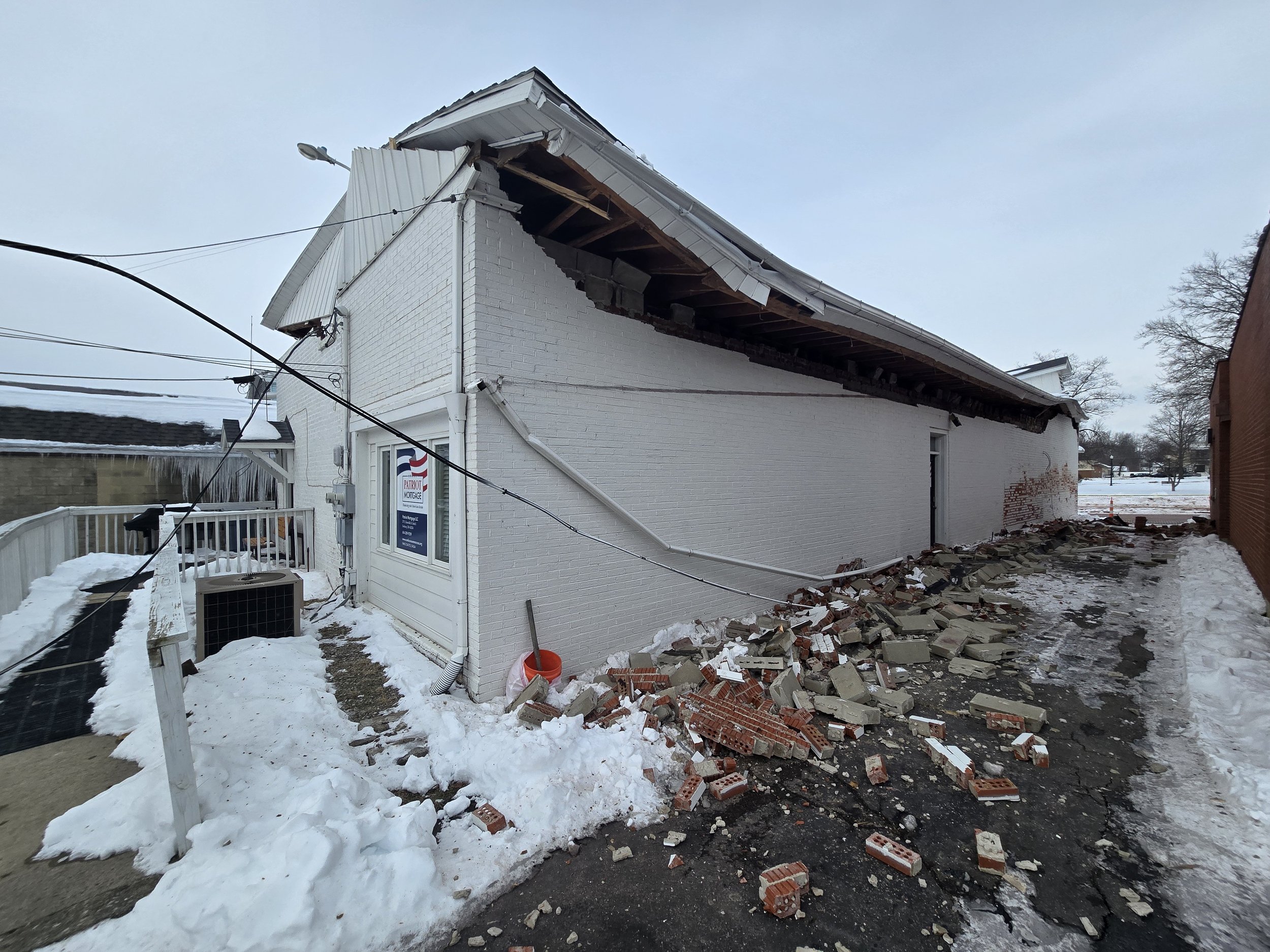
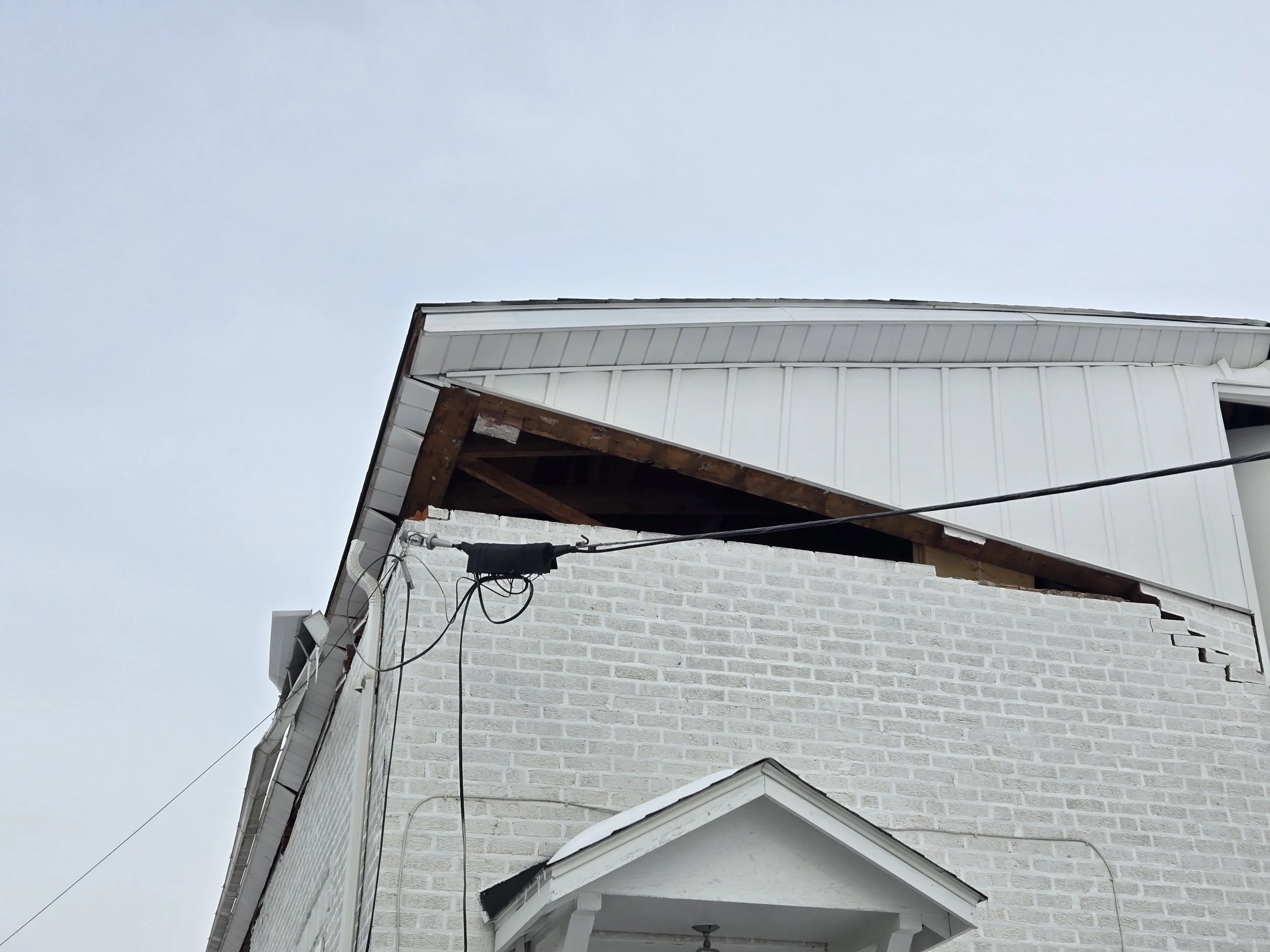
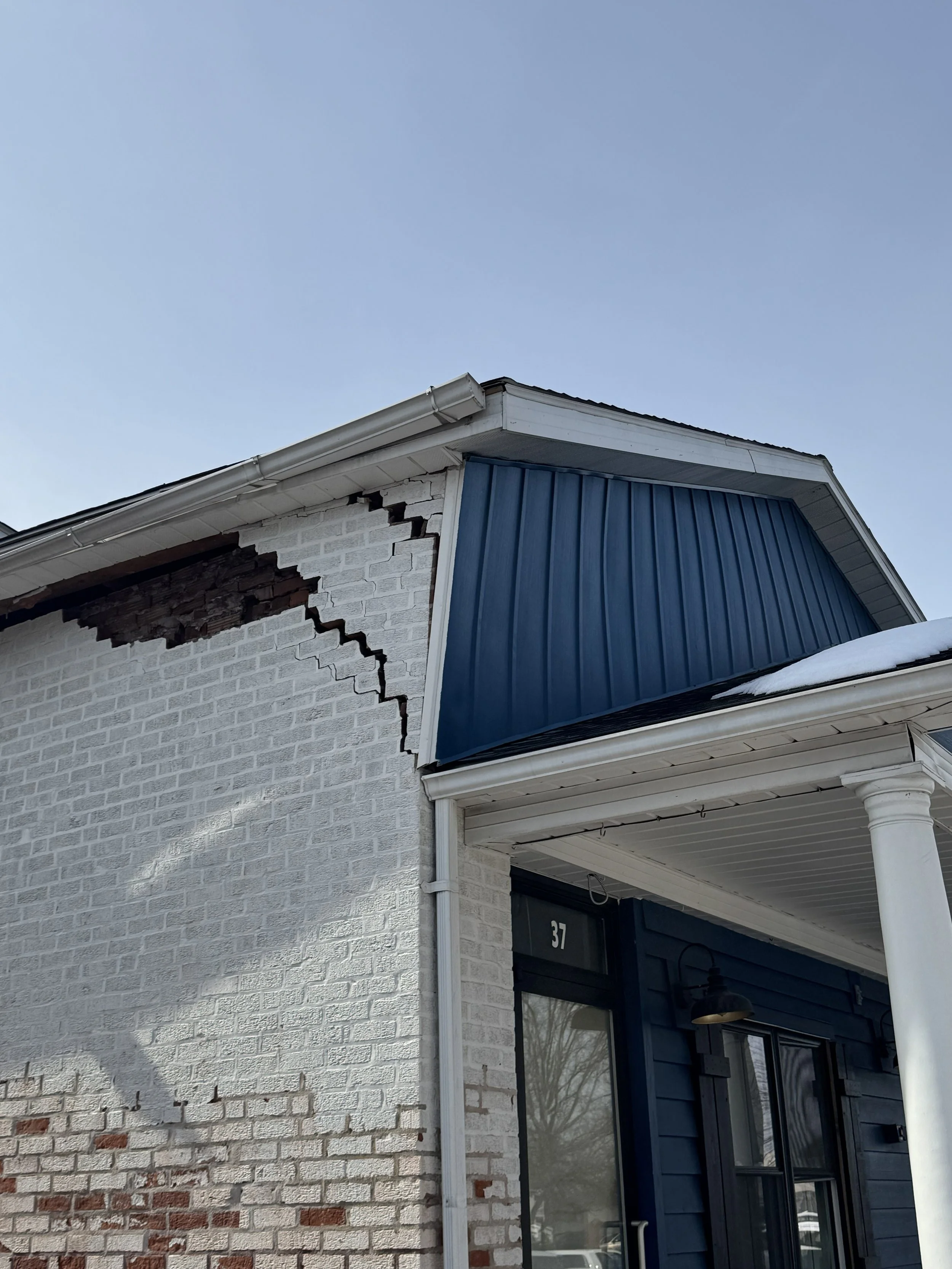
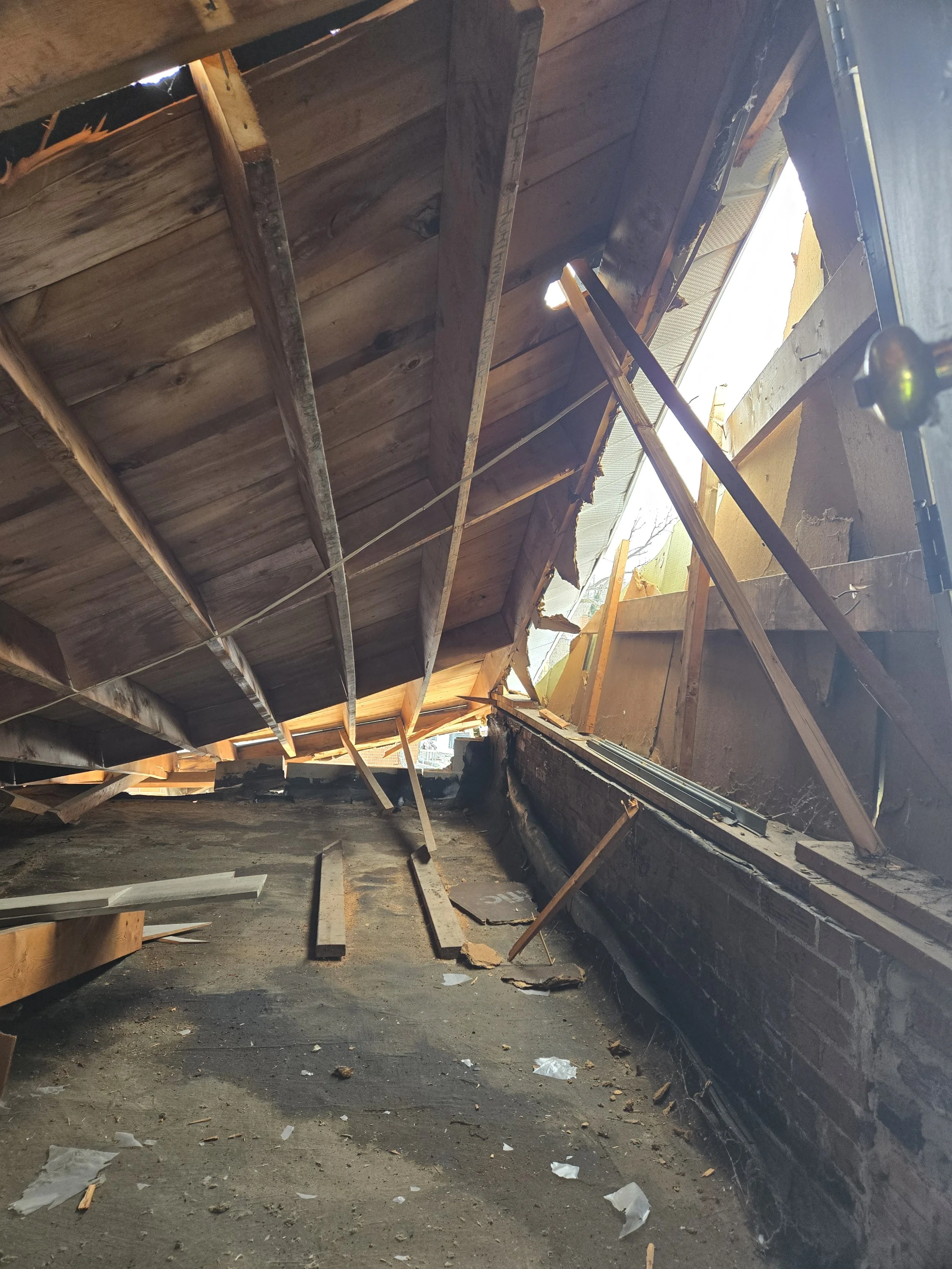
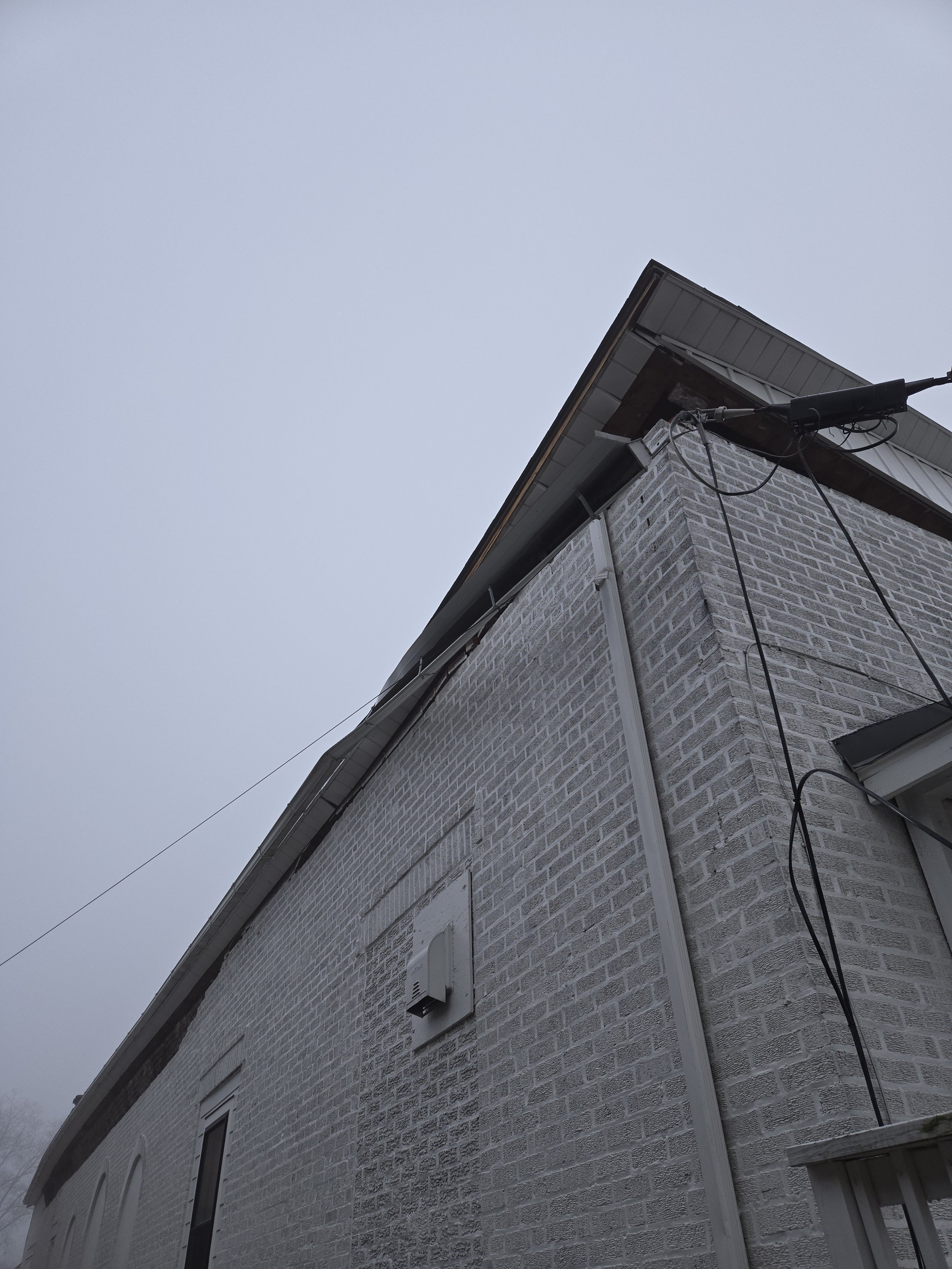
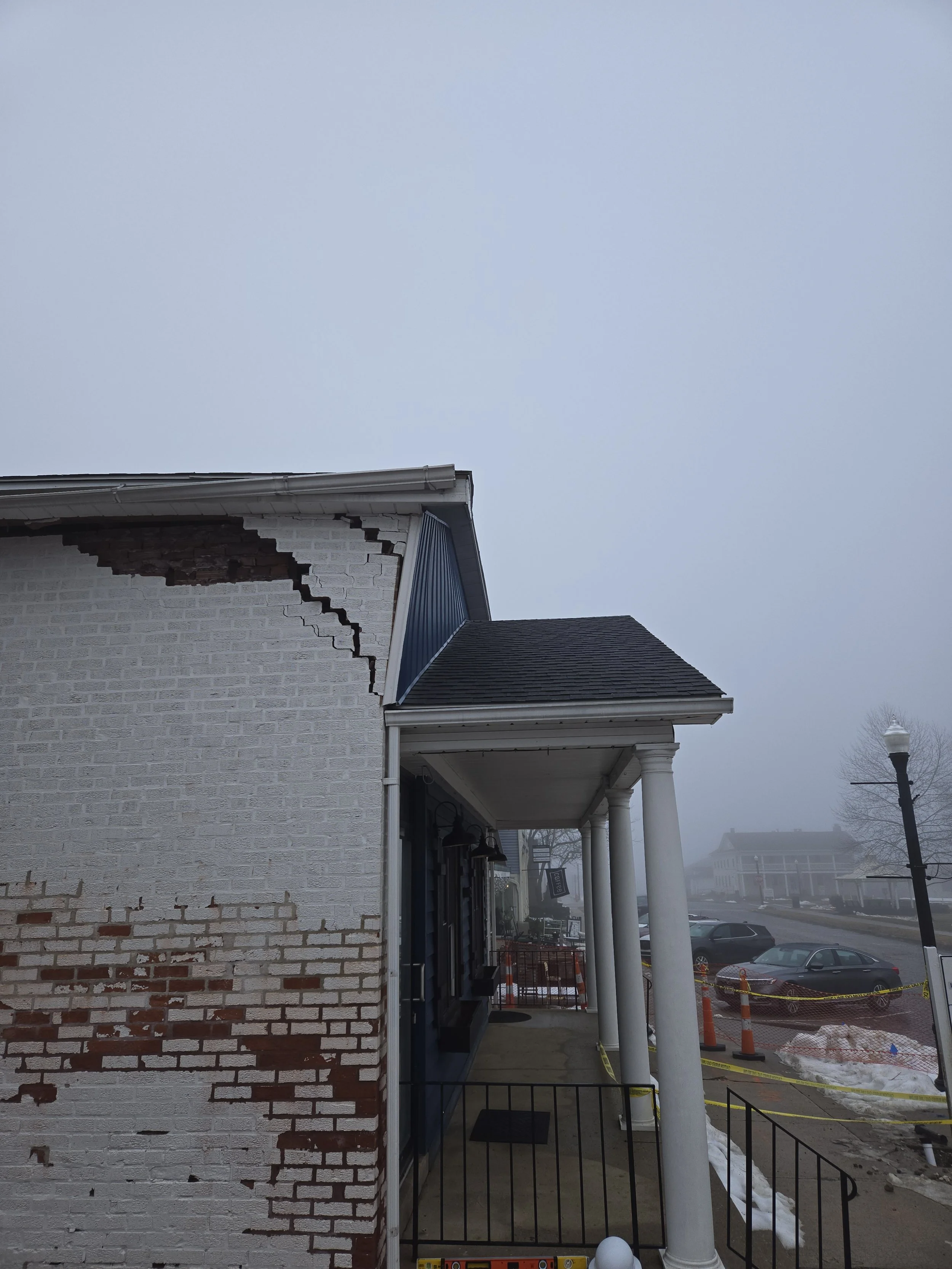
The retrofit introduced horizontal thrust that was not adequately resisted. Under the added snow load, the east masonry parapet experienced a localized failure, resulting in a partial collapse. The loss of lateral support led to the displacement of the roof framing system.
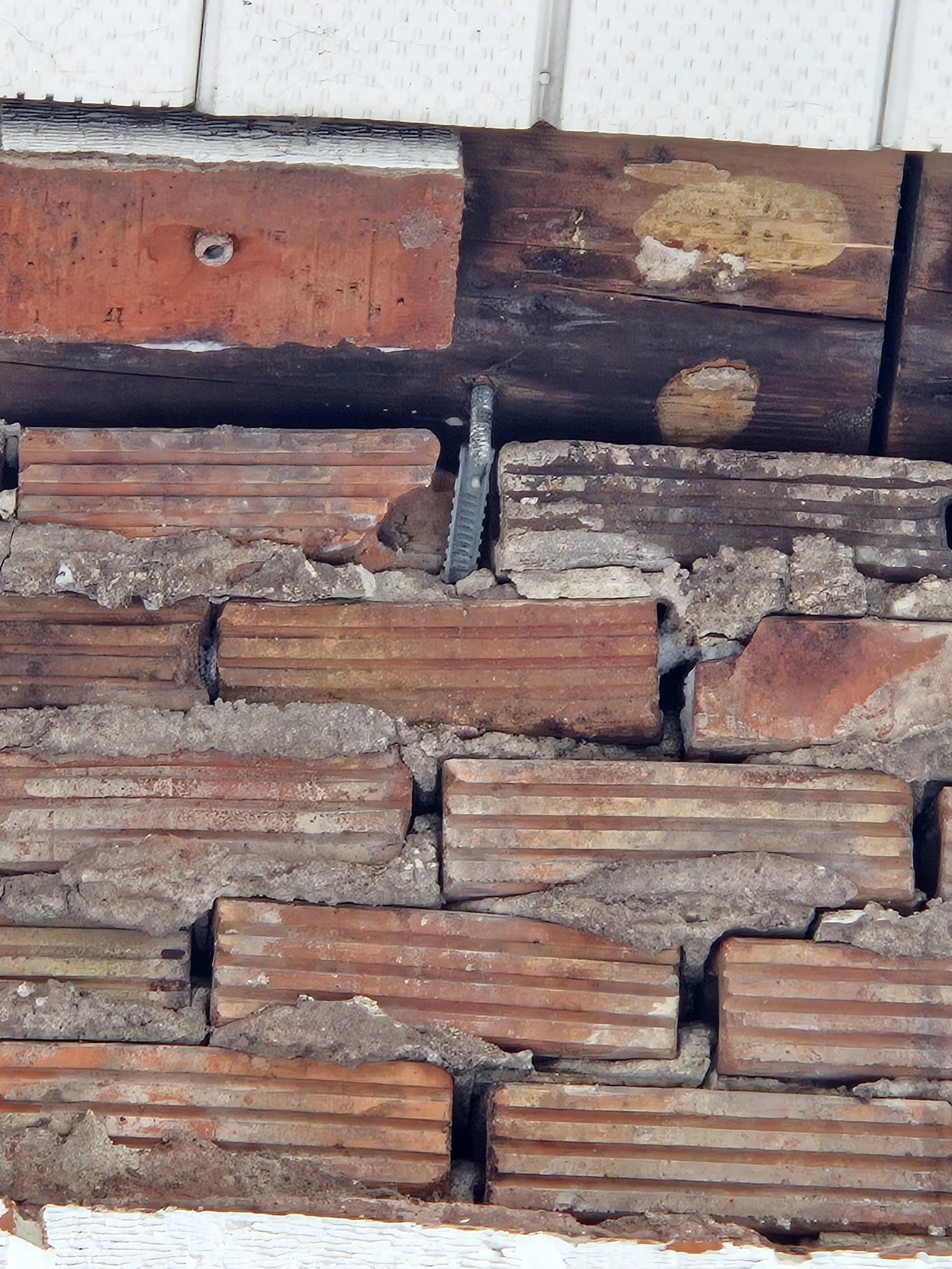
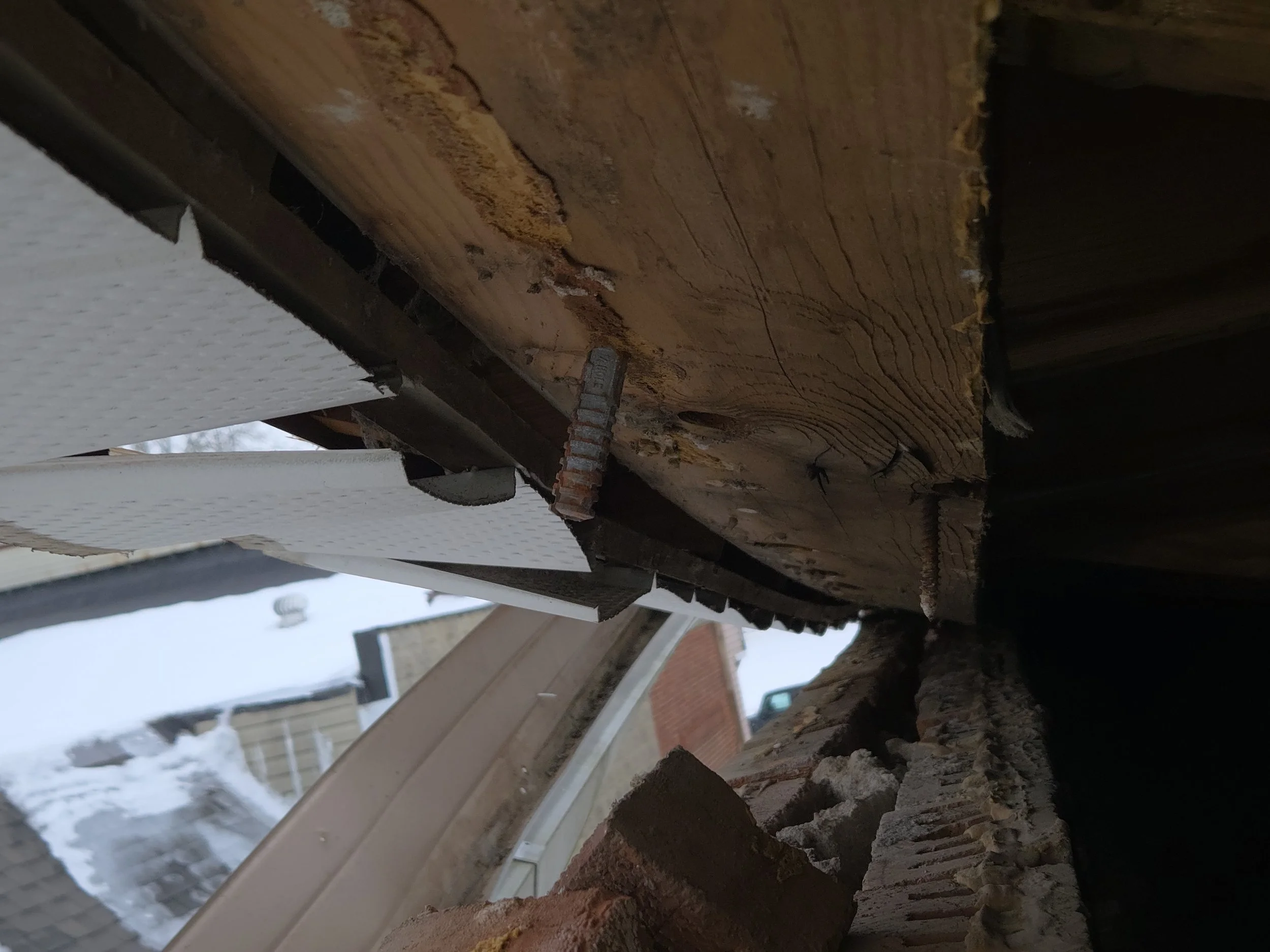
Site photos after the incident:
Field Observations
A site visit on February 5, 2026 identified several key contributors to the failure:
Rafter Bearing: Retrofit rafters were bearing directly on the existing masonry parapet walls.
Lateral System Deficiency: Although rafters were anchored at the parapet, the rafter ties were intermittent, undersized, and discontinuous, resulting in no reliable continuous lateral load path.
Extent of Damage: The failure was largely isolated to the exterior parapet and roof overhang. Interior framing remained stable, with only minor damage observed, including a crack at the rear addition interface and a broken basement window from falling debris.
The core issue was a lack of a continuous lateral load path. The retrofit pitched roof introduced horizontal thrust into a masonry system that was not adequately restrained.
Under snow load, this thrust forced the parapet outward, destabilizing the roof system. While a global collapse was not imminent, the remaining roof framing and parapet sections were unstable and presented a significant safety hazard under additional wind or snow loading.
Recommendations and Moving Forward
A phased approach was recommended to stabilize the structure and move toward permanent repair:
Immediate Life-Safety Actions:
Restrict access around the affected area. Remove snow in a controlled manner to reduce loading on the remaining parapets. Remove loose masonry and install temporary shoring to stabilize the roof framing.
Long-Term Restoration:
Perform a detailed structural analysis to establish a continuous lateral load path for wind and snow forces. Rebuild and reinforce the damaged parapet to restore full structural capacity.
Site Progression and Change in Structural Condition
As stabilization and cleanup operations progressed, additional structural deficiencies became evident that were not fully apparent during the initial site visit.
The exterior walls consisted of a 4-inch brick wythe with a 4-inch CMU backup wall, with limited mechanical connection between the two. As work continued, it became clear that composite action between these wythes had been compromised. The wall system effectively transitioned from a single 8-inch assembly to two slender, independent 4-inch wythes, resulting in a significantly reduced capacity.
During early shoring efforts, the wall system exhibited observable movement under relatively minor disturbance. This behavior confirmed that the structure was highly sensitive to load redistribution and no longer functioning as a stable, unified system.
Further observations identified:
Out-of-plane wall displacement and rotation
Progressive cracking and separation at the parapet and wall interfaces
Loss of reliable load transfer between wall components
At this stage, the structure could no longer be relied upon to resist wind, construction loading, or further disturbance.
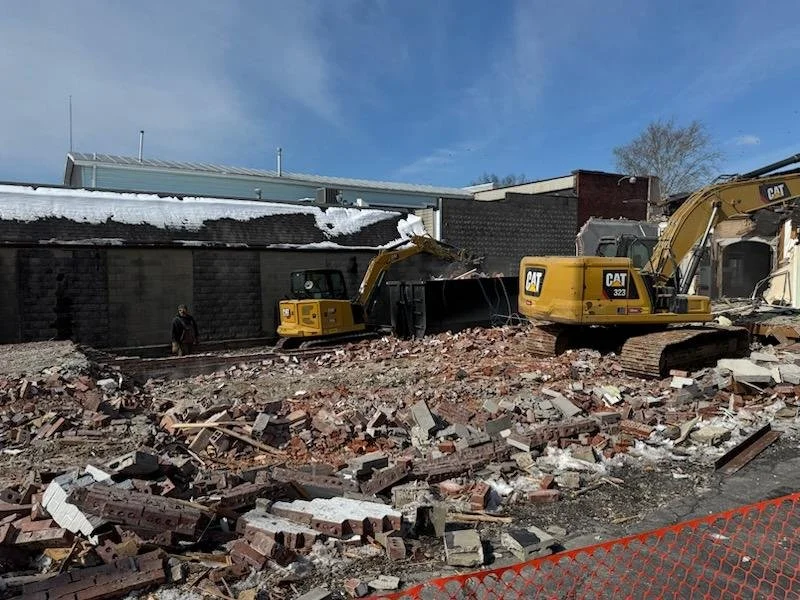
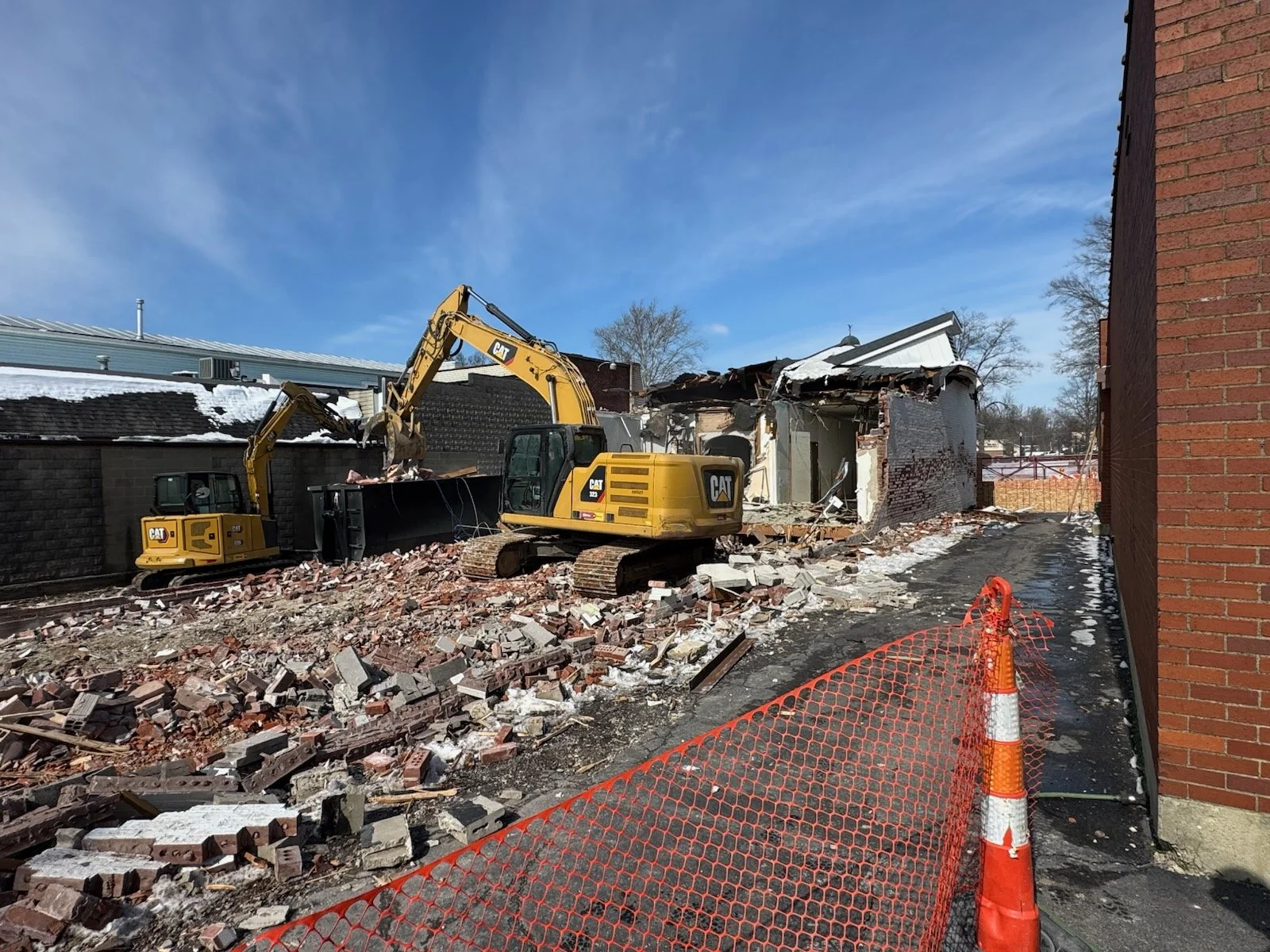
Based on these observed conditions and continued progression of instability, it was determined that stabilization and partial repair were not viable. Controlled demolition of the above-grade structure was identified as the only reliable path forward to address life-safety concerns and prevent uncontrolled collapse.
This incident is a reminder that retrofits must be engineered with a full understanding of the load path.
Changes to a structure don’t just add weight; they change how forces move through the system.
At SDC, we specialize in identifying these conditions and designing solutions that are practical, reliable, and safe.
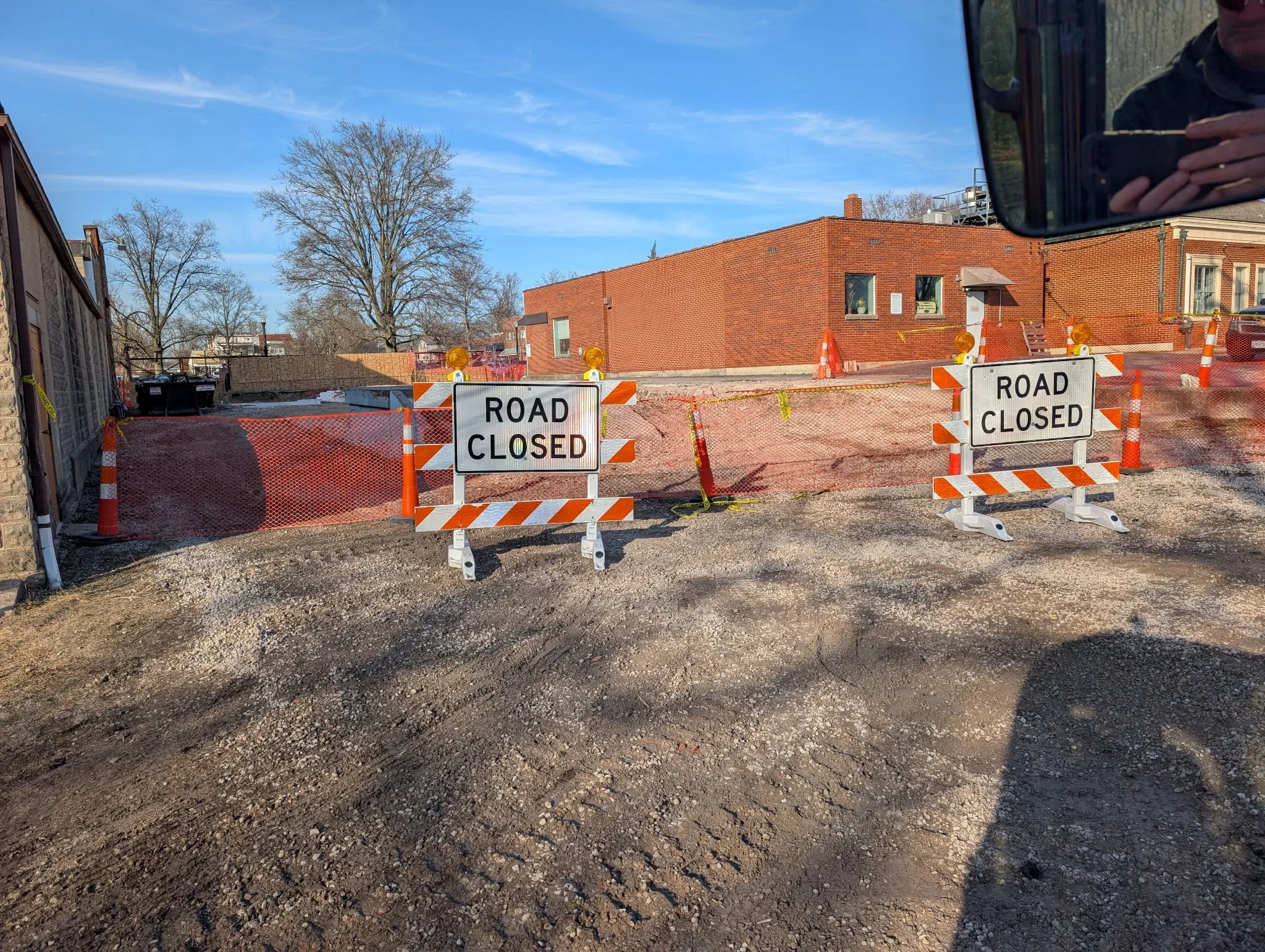
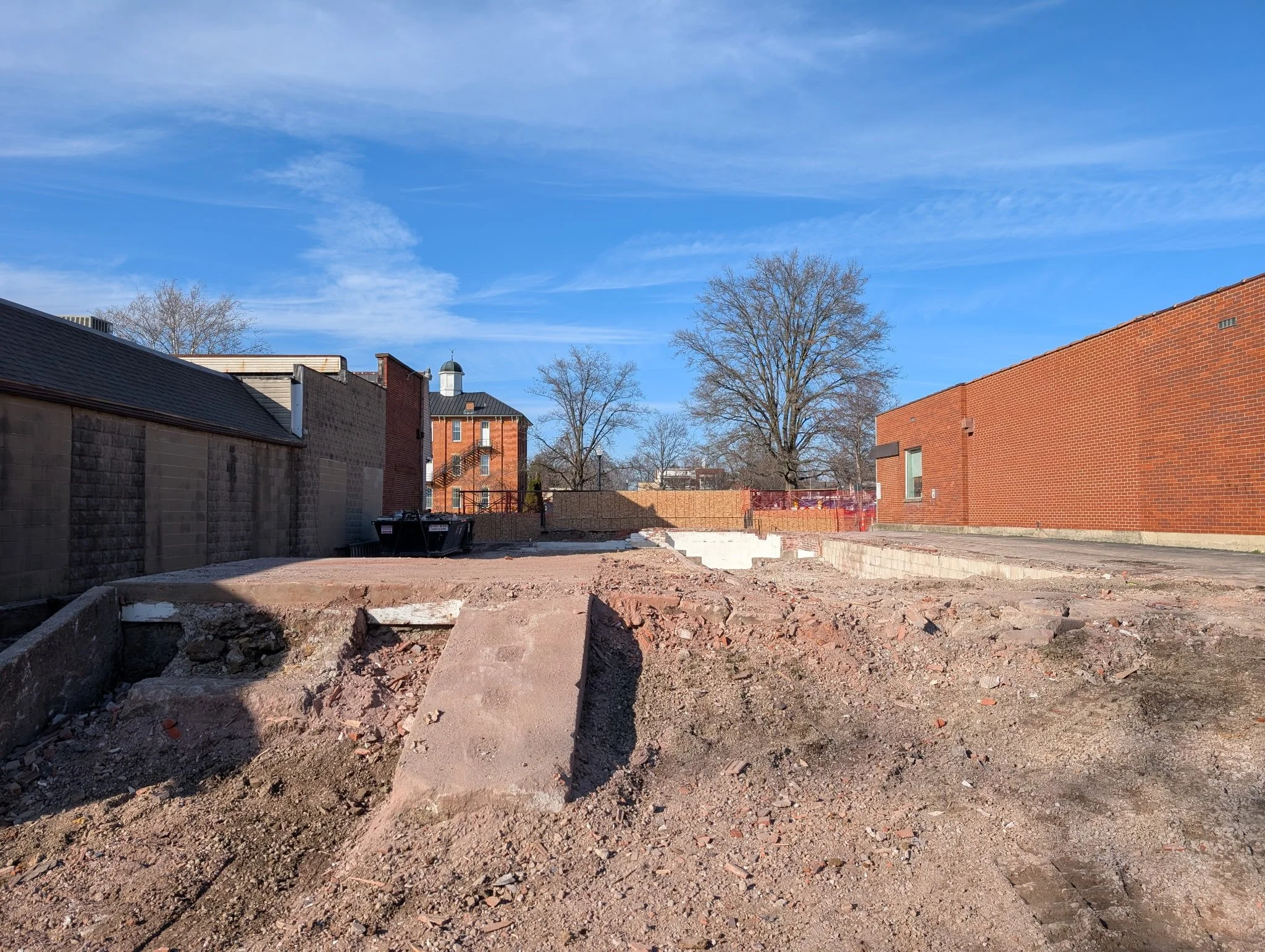
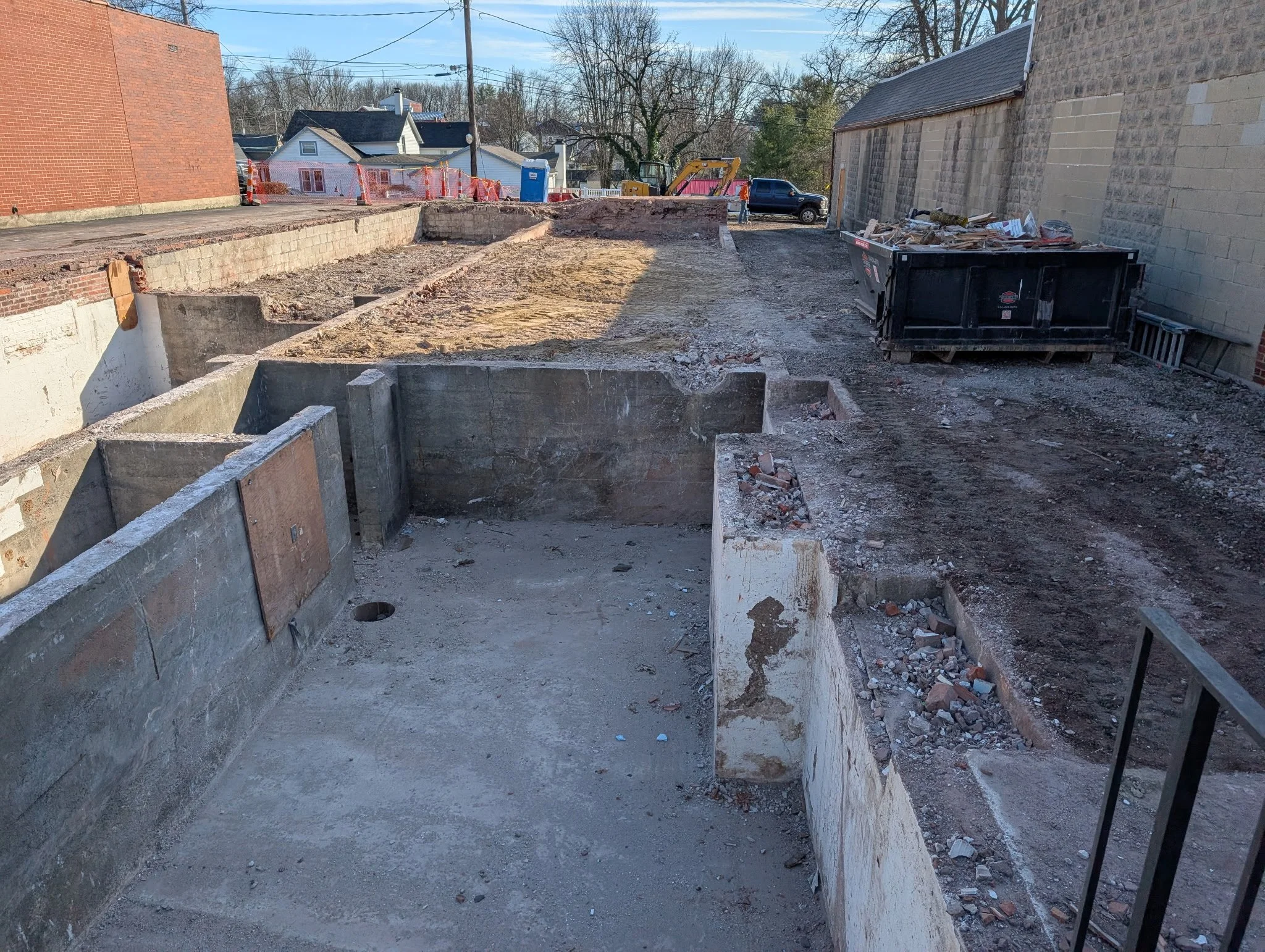
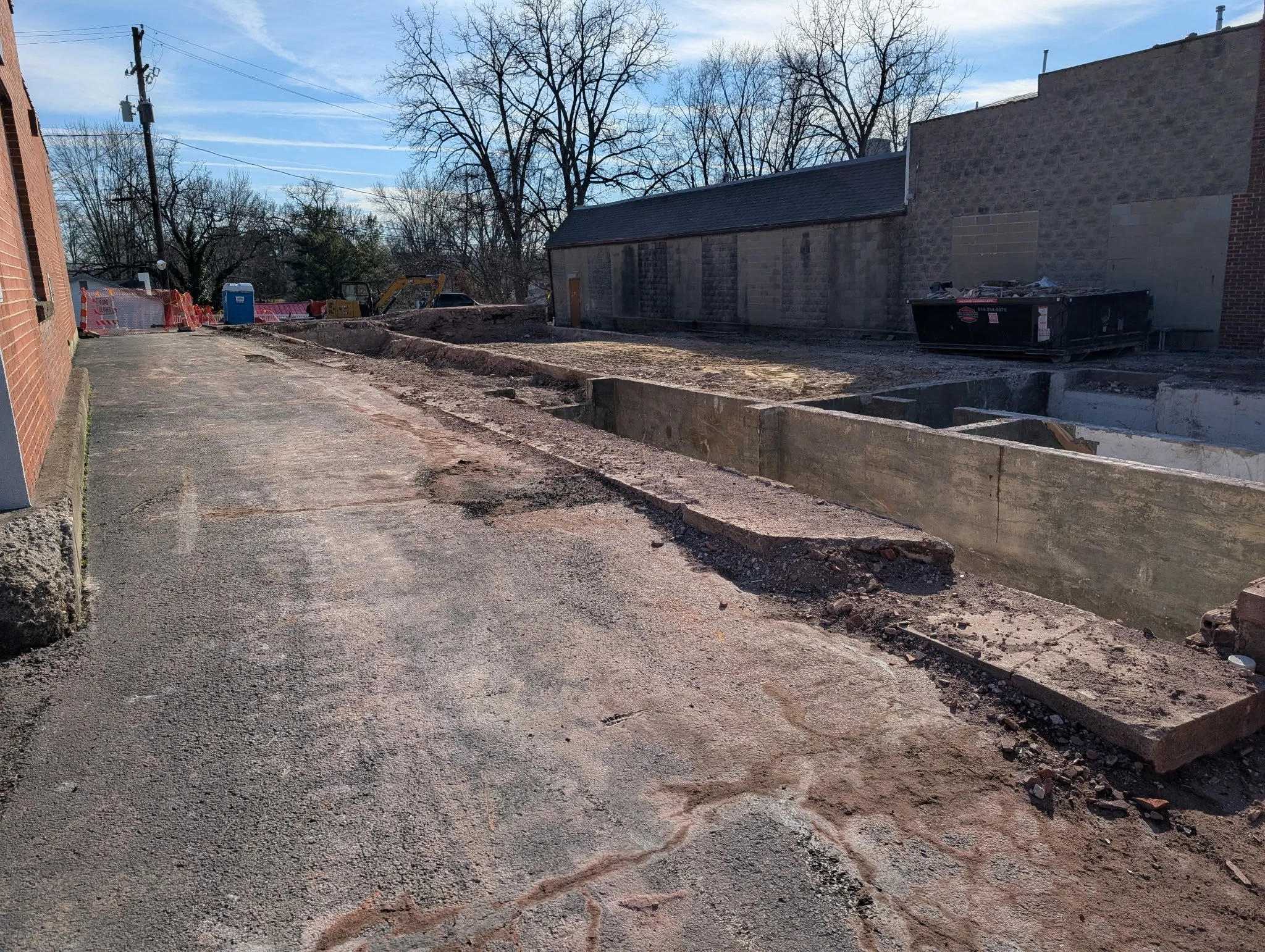
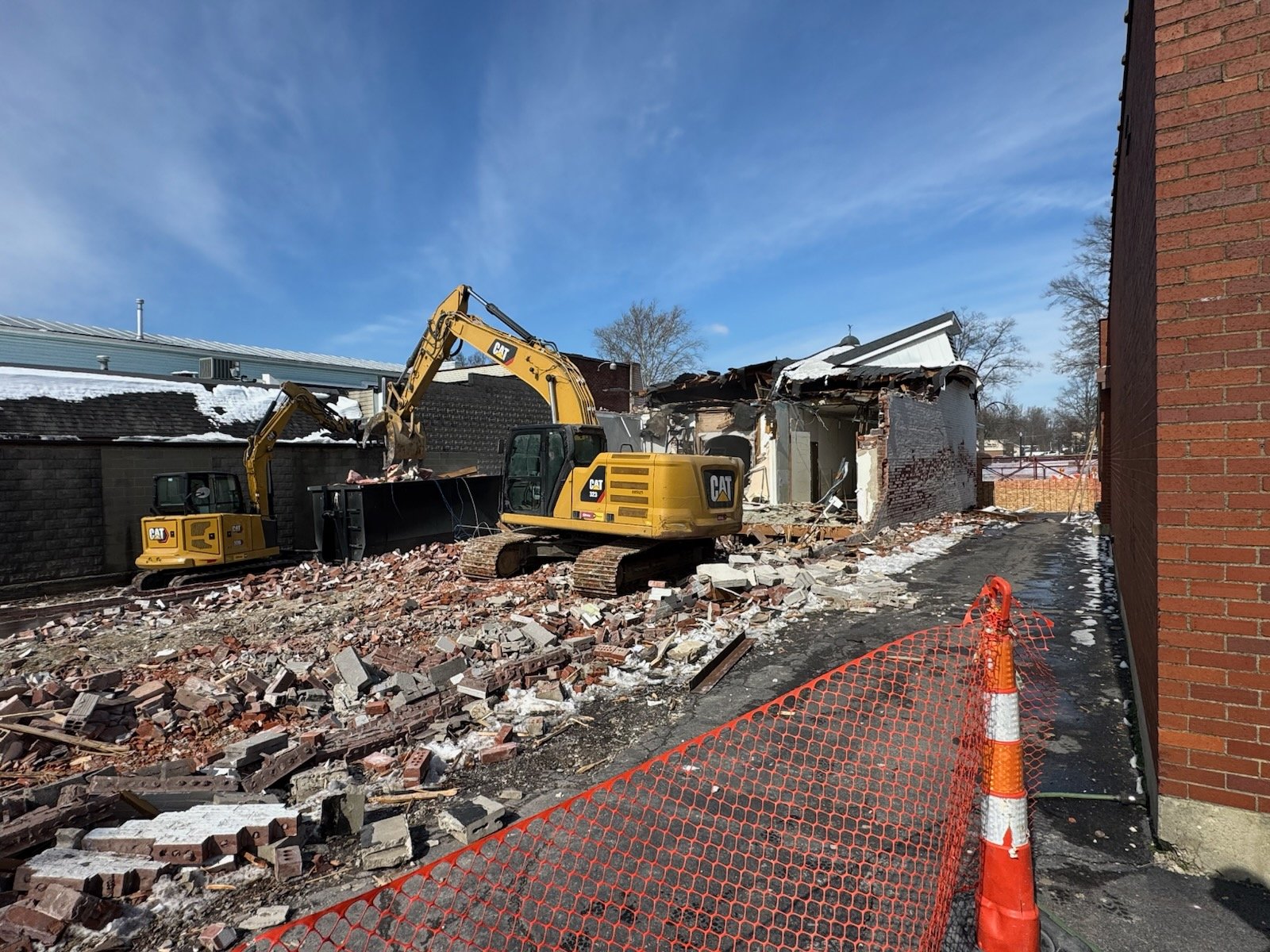
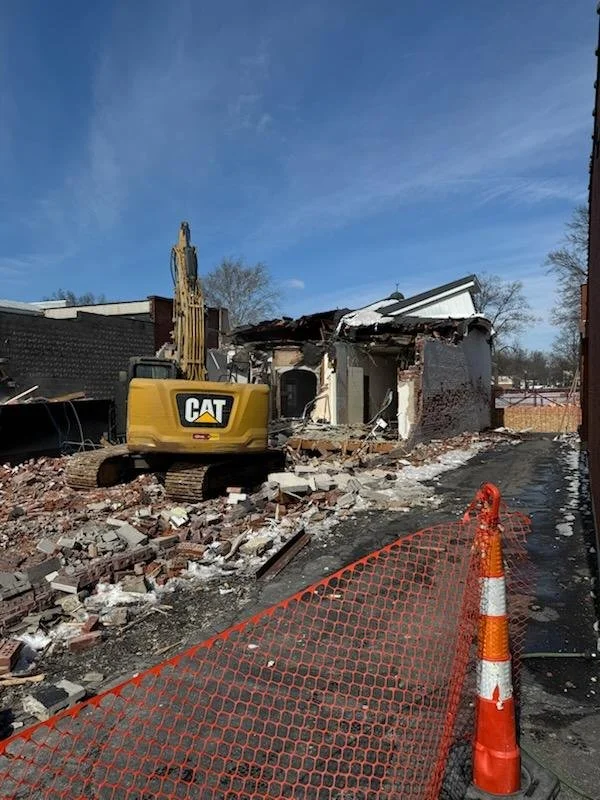
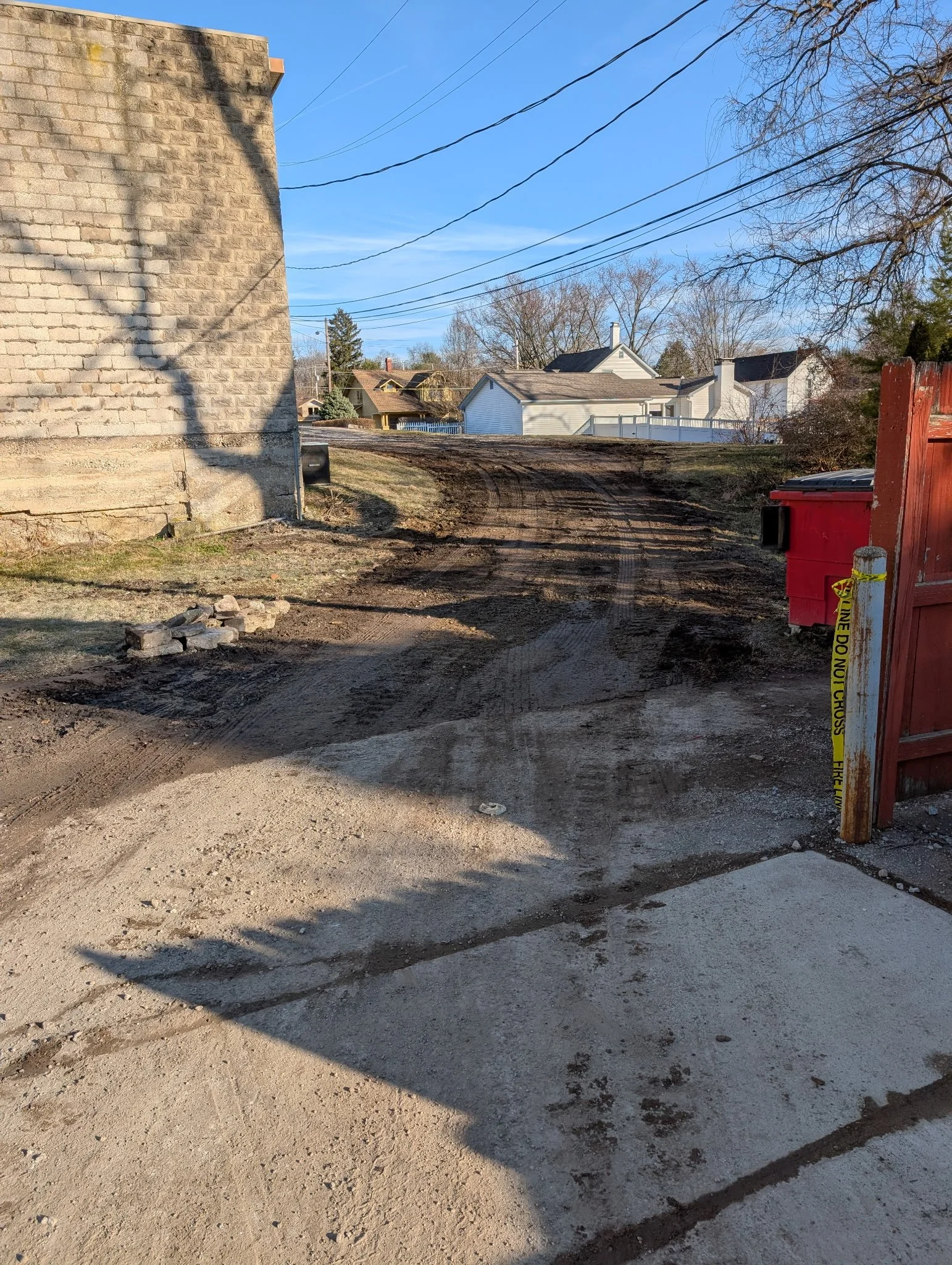
Site during/after demolition work: